
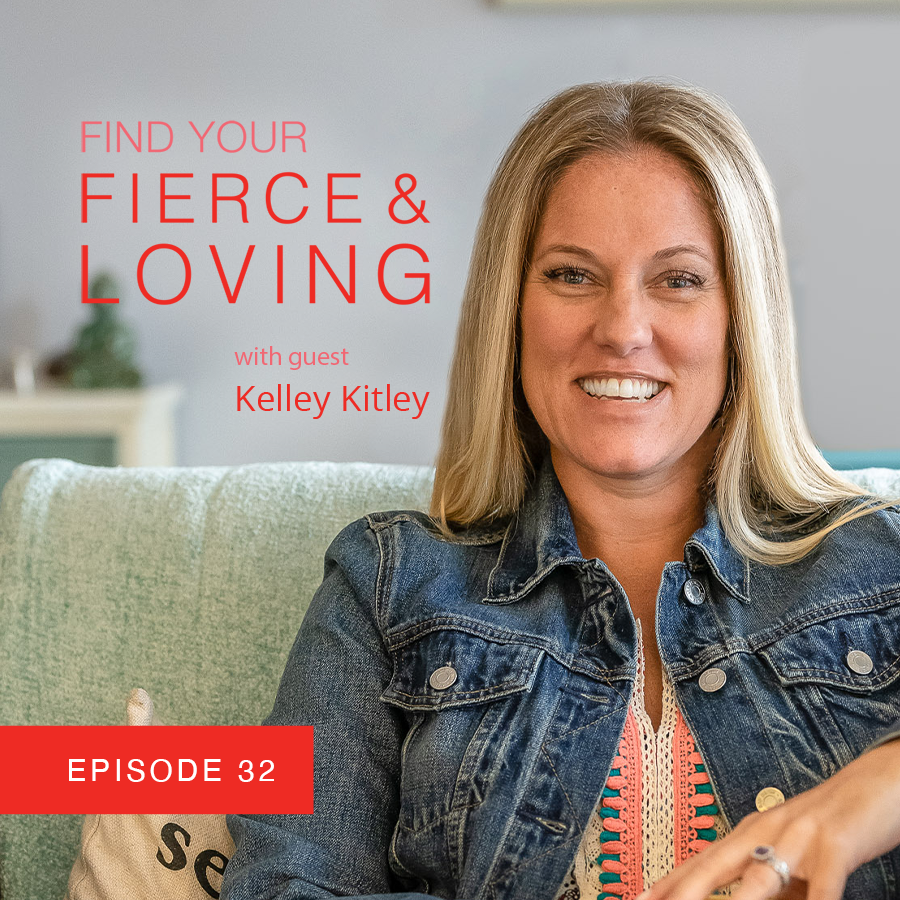
“Sharing my story actually had the opposite effect. It opened up this whole other culture for me in terms of having platforms to share my experience on.” – Kelley Kitley
When Kelley Kitley wanted to publish a book about her life, she was told that it would ruin her career as a therapist. Instead, she found greater connection and strength with her clients and has been able to help them, and a newfound public audience, more than ever before.
Show Notes
After Kelly Kitley struggled in her relationship with alcohol for years, she decided to stop drinking altogether. She discovered that there are many communities to support sobriety, that there are practically infinite reasons people choose not to drink, and that the mainstream narrative on alcohol doesn’t cover so many experiences. Kelley channeled her own experiences with alcohol, sexual violence, and mental illness into a stunning memoir that has expanded her therapeutic practice into public advocacy work as well as one-on-one treatment.
This week on Find Your Fierce & Loving, Lola and Kelley dive into their relationships with alcohol, intimate partnerships, and their shared Oak Park neighborhood. Listen in to investigate your own experiences and how you can reclaim them to better your life.
- (02:14) – Offering your story
- (09:59) – Relationship with alcohol
- (17:33) – Therapy in a pandemic
- (29:00) – Sex and relationships
Kelley Kitley is a Licensed Clinical Social Worker and has been inspiring and motivating clients for 20 years. Kelley is a sought after international women’s mental health expert and award winning best selling author of An Autobiography of Survival, “MY self.” She’s appeared in hundreds of publications, podcasts, live news, and radio including WGN, NBC, The Chicago Tribune, Huffington Post, Self, Shape, and as a columnist for Fitness Magazine, Recovery Connection, and Thrive Global. Kelley has shared her experience, strength, and hope on national media outlets such as TODAY, Dr. Oz, Dr. Drew Access Live, and as a TEDx speaker.
Do you want to unleash your inherent love and goodness, liberate yourself, and free humanity from the oppressive systems and structures we have created? We are here to support you in finding your fierce and loving life. Join us in Our Circle, a vibrant membership community rich in opportunities for engagement and transformation. Find out more at lolawright.com/our-circle.
You can follow Lola Wright, on Instagram, Facebook, LinkedIn, and Twitter and learn more about my work at lolawright.com.
Chicago born and built, Lola grew up in wealth and privilege, yet always sensed something was missing. She sought out aliveness and freedom in music, immersing herself in the hip hop and house music scenes of 90s Chicago. After finding herself on her own at 23, as the mother of two young children, she became determined to create a new experience.
Lola is an ordained minister with a gift for weaving together the mystical and material, she served for many years as the CEO of Bodhi Center, an organization committed to personal transformation, collective awakening, conscious activism, and community-building.
This podcast is produced by Quinn Rose with theme music by independent producer Trey Royal.
If you’d like to receive new episodes as they’re published, please subscribe to Find Your Fierce & Loving in Apple Podcasts, Google Podcasts, Spotify, or wherever you get your podcasts. If you enjoyed this episode, please consider leaving a review in Apple Podcasts. Your reviews help others find the show.
Transcript
Lola Wright (00:01): Something is stirring. Maybe you’ve felt it. We are reckoning with the reality of injustice and binary thinking that feeds the political machine. Humanity is in the midst of a heartbreaking and painful paradigm shift. That is a good thing. My name is Lola Wright, and this is Find Your Fierce & Loving. This podcast is intended to help you disrupt, untangle and free your mind of personal and collective agreements, patterns and beliefs that are holding you back and weighing you down. We desperately need your fierce and loving purpose now more than ever. I am so very excited to invite this incredible guest to Find Your Fierce & Loving today. I think you’re in for a real treat. Let me tell you a little bit about her. Kelley Kitley is a Licensed Clinical Social Worker and has been inspiring and motivating clients for 20 years. Kelley is a sought after international women’s mental health expert and award winning best selling author of An Autobiography of Survival, “MY self.” She’s appeared in hundreds of publications, podcasts, live news, and radio including WGN, NBC, The Chicago Tribune, Huffington Post, Self, Shape, and as a columnist for Fitness Magazine, Recovery Connection, and Thrive Global. Kelley has shared her experience, strength, and hope on national media outlets such as TODAY, Dr. Oz, Dr. Drew Access Live, and as a TEDx speaker. Kelley, I am so happy to have you. Thank you for being here!
Kelley Kitley (01:53): I am so happy to see you and be here as well. Thank you for having me.
Lola Wright (01:57): Yes, so first, what you all should know is that Kelley and I live, I think probably like blocks away from each other. I’m not entirely sure if we’ve ever met, but we’ve seen each other and danced around each other largely online, I would say. One of the things that I’ve always been curious about with you is you’re pretty outspoken about your personal journey, your personal story, and you really use that as an offering to support people in their own awakening we might say, or their own journey. Can you tell us a little bit about like what the threads are in your personal story that is alive in your work today?
Kelley Kitley (02:39): Absolutely. And, are we allowed to start the conversation in tears? I just know it’s a serendipitous moment, and it’s so wild that we haven’t met, but I feel like our energies have, which is so awesome. I grew up above my parents’ bar in Lincoln Park, and when I tell people that they’re like, “Oh, so that’s why you’re a therapist”. And, I grew up there. I met my husband there. There are a lot of awesome memories there, but it also was a lifestyle that I grew up in thinking that everybody drank the way people at the bar drank and that this was just a very normalized community because it was normalized within the community. So, I didn’t really understand anything outside of drinking culture. It was just very normal. And, for so long, I hid my own drinking and in a way that I was a binge drinker, and I would blackout. And, I would do things that I regretted and then woke up with shame and embarrassment and just repeated the cycle. But, when I would talk to girlfriends about it in my twenties, they’d be like, “Oh, Kelley, you’re overreacting. We’re all like that”. There was this normalization, even in that culture. And, all throughout this time, I was drawn to social work at a really young age. And, I went to the Jane Addams College of Social Work at UIC for undergrad and grad school. And, addiction runs deep in my family of origin. So, I was always curious, and I thought, well, I’m going to dodge this bullet, and I’m going to study addiction. And, I’m going to learn as much about it as possible, and I did that and then continued in my social work career and continued to be pretty private about some of my own struggles except for close friends. I was sexually assaulted by a random act of violence in my twenties on the Southport Corridor in Chicago. And, just a lot of the things I went through was so isolating, and I felt so alone, and other than being in therapy and sharing what was going on for me with my therapist and healing through a lot of that work. Fast forward all these years and my eight-year sobriety anniversary is coming up, so…
Lola Wright (05:09): Congratulations.
Kelley Kitley (05:11): Thank you. Thank you. It’s very exciting, and I didn’t plan on sharing my story the way that it all unfolded. I always worked in group practices in therapy as a clinician, and it was kind of an old-school philosophy of you don’t really share a whole lot about yourself. You’re there for your clients and to hold space and to help them move through things. I always knew I wanted to write a book. But, colleagues of mine were like, “Kelley, it’s going to ruin your career. Like, you don’t write an autobiography as a therapist. They’re looking to you as the expert”.
Lola Wright (05:48): Yeah. I just want to say as an ordained minister, it’s very similar. I mean, I think about my uncle who was a priest, a monsignor and ended up in a rehab for priests and… It’s all about sort of presenting a particular way. And, I really feel like that is not the future at all. I mean, if the people that we lean on or the people who have said, “I’m here to serve humanity in a very explicit way,” have to be this like ideal of existence and there’s no room for their humanity like that’s just a trap.
Kelley Kitley (06:27): Absolutely. And, I think as I have continued to share my story, clients have been drawn to me because they know my experience. And so, when I released the book about five years ago, it was also at the same time I left the group practice. So, it was pretty simultaneous, and there are two camps. There were people who were like, “So, you actually really know what I’m talking about” after having read my book. “Now, let’s talk about my drinking or now let’s talk about my history of sexual abuse”. So, there was like this awakening that happened in terms of how it shifted the client clinician relationship. Very few were like, “You know, I’d really rather not know any of that about you”. I maybe lost a couple of clients who didn’t want to continue working with me after that, and that’s okay. But, sharing my story actually had the opposite effect. It opened up this whole other culture for me in terms of having platforms to share my experience on. And, I was kind of coined this like mommy drinking culture after being on the TODAY show that I didn’t particularly identify with in terms of this is my branding. This is who I am. It kind of unfolded that way. And, I’m grateful for that now because as we were discussing earlier, there’s a whole culture too, of women who are looking at being sober-curious, or exploring what life without alcohol could be like. And, certainly moms during the pandemic who have recognized their drinking more and looking for ways to either moderate their drinking or give it up completely.
Lola Wright (08:11): It’s so interesting because I am not much of a TV watcher, and there are far fewer options for entertainment in the pandemic, right? So, I’m like watching more TV. And, I’ve said to my husband so many times, “Alcohol is literally in every single scene”. It is so bizarre to me that alcohol placement is front and center, and it’s all like there’s this allure around it. Like, every sort of like ambiance requires a glass of wine or a bourbon, or it’s fascinating to me. And, much of my work is in the realm of the subconscious mind. So, all of that is programming our subconscious, such that even I can find myself susceptible to like, “Oh, the snow is falling. A candle’s lit. The obvious choice would be a glass of red wine”. I mean, I’m like, “What the fuck? What is happening right now?” So, I’m just so aware of that. And, I think, I imagine, especially as I’ve watched this sort of sober-curious movement develop strength, I am certain that in… I don’t know if it’s a decade. I don’t know if it’s two decades. But, something’s going to happen such that we begin to relate to alcohol… And, I think to some extent we already are in the way that we once related to tobacco.
Kelley Kitley (09:36): Absolutely. I see it changing in that way. And, I hope it does.
Lola Wright (09:40): And, I will say, even my young adult children, they articulate the impact of alcohol and understand it to be arguably far more negative than even like weed, for example. So fascinating to have these conversations. I don’t know if you know this about me, but I’m like third-generation church of AA.
Kelley Kitley (10:04): I did not get that piece about you.
Lola Wright (10:07): Yeah, so both of my grandparents on my maternal side were sober for… I think over 30 years. My grandmother on my father’s side was sober for… I think almost 30 years. Large Irish Catholic family on both sides. My family is very out about this. For me, I can have sort of the opposite experience where I obsess about alcohol for fear that I could be an alcoholic despite the fact that I am not much of a drinker. And so, it’s a real head trip… The whole topic is. So, I just want to… Wherever you are as a listener in relationship to this thing called alcohol, I think the opportunity is really to bring awareness to our relationship with it
Kelley Kitley (10:55): A hundred percent because even now people are like, “Well, you’re not really an alcoholic. You just decided to stop drinking”. I’ve really tried to help people move away from the label or AA is the only way. Because that sets people up for failure. And, I didn’t look like the way my uncle used drugs and alcohol or the way my father did. And so, for me, it was so important to see women my own age and demographic that I related to that had a similar story to be like, “Oh, there are other ways to get sober”. And, the way that I ultimately did was my best friend stopped drinking, and she and I drank very similarly. And so, I got sober about three months after her. And, I started out in AA, and I still think AA is a wonderful resource but there are also a lot of other resources. And, I think it’s important to connect to those as a support, especially during the pandemic because so many people are relapsing and so many people are noticing that they do have a problem with alcohol during the pandemic.
Lola Wright (12:14): So, what’s the context for you as to why you don’t drink? Like, what do you hold as if someone says, “Well, why don’t you drink?” If you don’t claim that you’re an alcoholic, then what’s the context that you’re holding?
Kelley Kitley (12:26): Well, I’m very open with it, with my kids. And so, I use that as kind of a framework that when I drink, I don’t particularly like myself, and I do things that I often regret. And so, for me, like you were saying, for so long, I knew it ran in my family. So, from the first time I had a drink at 12 that ultimately ended up in a blackout… That dialogue, “Oh my gosh, you’re going to become an alcoholic. You better watch what you’re drinking”. And so, it would be like, “Fine. I’ll only drink wine. I’ll only drink beer. I’ll only drink hard alcohol”. And, it was this constant experiment for 20 years. I struggled with anxiety too and alcohol doesn’t help that. So, it took a lot of research for me to recognize I’m just better off without it. I’m pretty compulsive in a lot of things in my life, some better vices than others. And so, to recognize, like it just wasn’t worth it to me. At the end of the day, I mean, I had many rock bottoms, but the time I decided to stop drinking wasn’t my rock bottom. It was a very spiritual experience with my girlfriend. We had come from a workout class, and she just seemed so clear and at peace, and she had stopped drinking in January. And, this was March 9th or March 10th. I guess it was March 10th, my anniversary. And, she checked in with me and she said, “How’s your drinking been?” And, it just started pouring rain, and I’m crying in the rain. And she said, “It looks like you’re struggling. Do you want to come to a women’s meeting with me?”
Lola Wright (14:00): I have chills all over my body.
Kelley Kitley (14:02): Yeah. Yeah, and it was and I was like, “I don’t know. I have all these open bottles of wine in my house. I got to them drink first”. And, I didn’t know. And so like, I had this information. I had this opportunity to go to a meeting with her that week, and I wasn’t sure. And, I walked in the house, and I said to my husband, “I think I need to stop drinking”. And he said, “I think you’re being a little extreme, but okay”. And, it just kind of unfolded from there. And, I feel like I had no control in the situation. And, it just flourished where I gave up drinking for lent. I gave up drinking for marathon training all of these times where I was like, “I’m going to stop today”. And, I never did. And, this was a total out of my control experience. It was what I call a God wink.
Lola Wright (14:48): Hmm. I think one of the things I love about that story is it sounds like there was a lot of grace that was present. It was just like, there was a readiness in you that perhaps you couldn’t predict. And, fortunately, you had a friend that sounds like she was very tuned in, and she extended herself. I think that’s an interesting thing because we live in a time where I feel people are less and less willing to say things to one another that may rock the boat. It’s like, we’re so cautious. And so… As a very outspoken person, I can even notice that in myself. Like, I don’t want to rock the boat. I don’t want to bring up the thing. I don’t…
Kelley Kitley (15:37): Well, and two, I think people, I mean, you’re outspoken. I’m outspoken. I think sometimes people get nervous, “Oh my gosh, what is she going to say to me? Maybe she’s picking up on this”. And so, it was so… I think when you lead with that, people have an opportunity to call you out on your own shit. Where it’s like, “Well, if she says it like it is, then you give me permission to say it like it is”. So, I think that yeah… We grew up drinking some kind of alcohol in paper bags in the alley when we were going to our all-girls Catholic school in high school. And now, it’s like, we go to meetings together, and we both have built communities. She lives in the city. And, I’m obviously in Oak Park, and it’s just interesting once you kind of crack that not a little bit. Like, there are so many people in Oak Park who are in recovery, and it almost feels like they’re touchstones throughout my community, our community, at school drop off, at the grocery store.
Lola Wright (16:49): You want to be more alive. You want to unleash your inherent love and goodness, liberate yourself, and free humanity from the oppressive systems and structures we have created. We are here to support you in finding your fierce and loving life. Join us in Our Circle. This is an affirming and radical space that will gather weekly, on-demand or live, whatever works best for your life. For more information on how you can engage in Our Circle, visit lolawright.com/our-circle. I’d love to have you with us. So, in this pandemic, there are a few industries that have soared. One is the grocery store business. The other is the alcohol business, and the other is therapy. And, you are a therapist. So, what has that… What are the threads that you’ve noticed over the last year in the human condition? What are human beings struggling with, and how has that been a mirror for your work, and or what are you struggling with over this last year?
Kelley Kitley (18:07): At first, it was like mental health halt when we first came into the pandemic. People were just trying to figure out where they’re moving their office, what they’re going to do with their kids. So, I think that there was a lot of like chaos. And, I remember initially, I was like, “I gotta find another job. I need something with benefits and a salary”. And then, it was like, “Okay, guys, slow down”. It was a slow month, a slow six weeks. You know people… I don’t take insurance, so that was the first thing people were cutting. I was an added expense. And so, I went from a really busy practice on the magnificent mile in this really nice office space to like “Yeah, I don’t have any clients for a couple days in a row”. And so, there was a panic that set in, and my husband is an actor and so theaters shut down. And, he wasn’t working on any sets. And so, for me, it was initial panic. And then, once I kind of talked myself through that and slowed down a little bit, I was like, “Okay, I’m not paying rent anymore because my lease had just happened to be up at that time”. And, I moved everything to zoom and phone calls, and then I started doing walking therapy. So, there were people who, especially some of my teenagers who are like, “I don’t want to be in my house with my parents in the other room and being on zoom”. So, I’d meet them at a park, and we’d walk for 45 minutes. So, it was really a shift. I would meet people at their house. We would walk around their neighborhood. So, it was really cool just seeing people in a different environment. And, I think they appreciated that too. Like, they welcomed me into their home, and we’d sit on their back patio. It became very different. But, more intimate for sure.
Lola Wright (20:01): I also think that like one of the things that my husband and I… My husband and I are both self-employed, so we went through our own experience with that also. But, it really, I think, has been such a great practice in fluidity and flexibility. It’s like when we stay rigid in times of the unknown, life feels even harder. When we’re in the unknown, and we can sort of like… I always say, loose knees and move your hips. Let… Just be ready. Stay ready. What’s wanting to emerge through you?
Kelley Kitley (20:38): Have sex with it.
Lola Wright (20:39): That’s right. Make it your lover.
Kelley Kitley (20:43): Right. It’s an acceptance model. I think the more we resist, the harder it becomes, and that’s hard to do, right. And so, as a therapist, who’s never gone through a pandemic, I’m going through a lot of this with my clients. And, that also opens up more conversation where they’ll say, “Kelley, what are you doing to stay sane? You’re at home with four kids e-learning, and what do you do?” And so, I am very honest and transparent, I’m like, “I’m trying to figure it out too. I’m moving my body. I’m trying to connect and really practicing what I preach”. And so, what I know is that I have a whole camp of clients who are working on moderation management with their drinking, or who have relapsed during the pandemic with a lot of years of sobriety. I’ve thought about it myself. Gratefully, I’ve never gotten to the point where I actually considered it, but it was like, “I’m bored. It’ll pass the time.” And so, I’ve had to up my meditation. I’ve had to up my meetings. And so, I’ve have found that through this process, as we’re coming out of it, there’s a whole another host of issues… Anxiety, relating, reaching out. My kids and I went to a local coffee shop, and it was like… There was so much social anxiety. How do I interact with the person that I’m paying for? People are getting too close to me. And so, I think that’s really scary. We’ve lived in this. I mean, the pandemic for our family has been awesome because everything has been paused. So, it’s allowed us all to just kind of be together. And, there’s been some really good things about that, but now I’m concerned about everybody’s anxiety and maybe struggle to interact with life outside the home. I’m even reassessing what my model is going to look like as a therapist that I may not go back into the office because people are talking about how convenient it is. I mean, and I crave like real-time human connection. I’m a hugger but for people… People are sitting on their bathroom floor, and they’re able to have those calls or those zooms at their lunch hour, and they don’t have to commute to the office. And, people are loving walking and doing therapy. So, I don’t know. I’m in that process too of re-evaluating what it’s going to look like for myself.
Lola Wright (23:29): Much of therapy, I think of as sort of like cognitive and behavioral. It sounds like you also personally have a sort of spiritual orientation to you personally. How has that informed your practice? How does that inform your own healing or process yourself?
Kelley Kitley (23:51): So, I am a cognitive behavioral therapist and part of the behavior… And, I grew up Catholic. I went to almost 16 years of Catholic school. And so, what that looked like then versus what it looks like now, is so different. But, I always… That’s a question I ask everybody in my intake: Do you align with any kind of religion or spirituality? And, people are always like, “No, no, no, no, no. I’m not religious. And then, I have to explain it to them what is spirituality and how is that different from religion? And so, I really start out with my clients in a way of behaviorally trying to incorporate five minutes of breathing or five minutes of meditation and recognizing what comes up for them. And, that connection where I work with a lot of very high functioning, high powered people, that they’re doing therapy at 6:30 in the morning because they’ve got to work their 12 hour day. So, I’m trying to explain to them the spirituality component of sometimes you don’t have to do anything, and you can find out some answers. And so, getting people to pause and be still… That’s so important for me because I’m wired to be an over-thinker and a doer. But, when I pause, I find out so much more of just a connection of, not to be cliche, but like the universe. And, for me spirituality is connecting with other people. Like, this conversation is very spiritually connected for me, and that’s how I relate in terms of something bigger than myself.
Lola Wright (25:38): One of the things that I like to ask in these conversations is, “What’s your invocation or your prayer for humanity at this time?” There’s something happening in the collective experience that we could perhaps all articulate distinctly. And, to some extent, I don’t even… I don’t think we even know what’s fully occurring. Like, something is moving. We’re shifting into a new paradigm. There’s breakdown that’s occurring, which I always experience as proceeding a breakthrough, to use another cliche. But, what’s the prayer that you extend to human beings right now?
Kelley Kitley (26:25): Well, the prayer that I’ve tattooed on my arm that I say a thousand times a day, is the serenity prayer. God, grant me the serenity to accept the things I cannot change, the courage to change the things I can, and the wisdom to know the difference. And, that grounds me. But, I think… What I have loved and why I said yes to having this conversation with you today is because my prayer is what you’re preaching. Is that we break down barriers, and we stop beating around the bush and collectively, we have all experienced a very tough year. And so, there’s no small talk about that. It’s, “How are you doing, and who are you leaning on? And, what do you hope to change now that you’ve had this experience?” So, my prayer is that people will be able to connect on a level that they’ve never connected before. That we kind of break down the bullshit and just like we were talking before, like, some conversations stay here like just a little bit above water or a lot above water, like let’s get a little deeper.
Lola Wright (27:33): Yeah. I think that’s actually part of what I’ve struggled with in this community, is I’m terrible at small talk. I mean, like terrible. Like, I literally will meet… I’ll be at a cocktail party and be like, “Race, religion, politics, sex, or your soul. What do you want to talk about?” And, people are like… I mean, I don’t necessarily exactly say that, but for all intents and purposes, I may as well. And, people are like, “Uh, that’s too much for me”. And I’m like, “Oh gosh. I just don’t… I’m not, not good at the weather.
Kelley Kitley (28:08): Well, and my husband calls me the silencer, and I was like that when I was drinking. So, I mean, I’m like that sober. Imagine how raw it was when I was drinking. “So, when’s the last time you had sex?” And, blah, blah, blah. And so, it was like, “Okay, at least the questions I asked now, I’m not like, “Oh my gosh, why did I say that?” I genuinely want to know.
Lola Wright (28:30): First of all, that’s a great question. That is a great question. When did you last have sex? For a variety of reasons, that’s a good question. For those of us that are single or for those of you that are single, physical touch is extremely important. So, even if that looks like getting a massage, your immune system requires it. And then, for those of us that have a painful relationship with sex, and I know you’ve done a lot in the realm of sexual abuse, trauma, like, what has that looked like for you?
Kelley Kitley (29:07): Well, the fact that I have a partner who has been committed to this journey with me and went into couples therapy with me as a boyfriend after I was sexually assaulted on the streets of Chicago and went to the emergency room with me. We had gone through a couple of therapists until we found one that really stuck. And, I remember her saying, most partners don’t stay by their significant other who have experienced sexual trauma. I mean, talk about a blanket statement there, but just having a very patient partner who has been with me from that traumatic experience, through 20 years of a relationship, has been very healing for me.
Lola Wright (29:57): Yeah. And for me, I’ve been married 14 years, and there have been a series of reinventions over the course of our marriage. And, I oftentimes will tell people, “When you’re exploring, whether your relationship is coming to an end or not, there may be value in considering that this iteration of your relationship is coming to an end”. And then you might ask yourself, “Do I have an interest in forming a new iteration of this relationship?” Because I think it’s like, whoever told us the lie that like something stays the same forever. That is a terrible trap.
Kelley Kitley (30:35): You’re absolutely right. And, that’s oftentimes why people are reassessing their relationship. And, the common thing that I hear is, “Well, who in their marriage is really having sex anymore because you’ve been having sex with the same person for so long. And during the pandemic, you’re spending so much time with them”. And so, there’s this like core belief across many relationships that there’s like an acceptance of, “Well, nobody’s really having good sex if you’ve been married 10 plus years”.
Lola Wright (31:05): And, I think for women too. I mean, I’m sure men have but in heterosexual relationships, what I oftentimes hear is this narrative that women have about their husband being sort of generally a pain in the ass, which I am also just like, “Gosh, that’s such a sad context to hold for one another”.
Kelley Kitley (31:25): Yeah, I agree. And I mean, we’ve gone through a lot in our relationship as many people have and many people who are listening, and I’m sure you have as well. But, the difference is that commitment to change and evolve together. And, my marriage is very non-traditional in terms of like very much of a role reversal. My mom and my brother stopped by yesterday, and my husband’s coming in with Costco and groceries, and they’re like, “Wow, you’re a really good husband. And, it was like, “I do. I appreciate that. I hate doing that stuff”.
Lola Wright (32:05): Me too. I hate it. I literally… Like, my least favorite place is the grocery store.
Kelley Kitley (32:12): So, it is. I mean, I think it’s being able to like move and evolve together and both people being open to. I think the hardest thing is when couples, especially come into couples therapy with me, and they have two totally different agendas and want different things and aren’t equally motivated. But, when you have two equally motivated people who want to kind of make some changes and are willing to hear the hard stuff and give feedback, then that’s what makes all the difference.
Lola Wright (32:45): My desire for this digital gathering space, is an invitation into greater authenticity and aliveness. I feel like so many of us are living these very sort of suppressed realities, and it can be uncomfortable to keep sort of inching your authenticity beyond the scope of what’s acceptable. But, I fundamentally believe that that is where freedom is found. And so, it is risky if you’re living inside of a container where everybody just needs to act and play nice, but there’s so much freedom found in honoring who you are uniquely here to be. I feel like you do that.
Kelley Kitley (33:25): I try to, as do you. And, I think being that voice to say that it’s okay. I mean, look, I’d imagine we’re very similar in terms of like, people either really love what we have to say and the way we live our life, or they’re like, “Oh, shut up or like, unfollow.
Lola Wright (33:48): Yeah. Like, the Oak Park Working Moms Facebook group… I have to really be mindful there because I just… I’m sure I’ve created a lot of frenemies in that environment. Because I’m like, “I cannot take it with the whining any longer. Shut up”.
Kelley Kitley (34:03): But, but so many people who have probably read those posts are like, “Thank you so much for saying that”. They might not write that, but they’re saying, “You say what everybody else is thinking”. And, there’s a lot of relief in that.
Lola Wright (34:16): Mm-hmm. Yeah.
Kelley Kitley (34:17): But, it’s also a hard… It’s a moral compass, right. It’s like what you lead with. And, sometimes it’s like, “I don’t always want to be the one to have to do that”.
Lola Wright (34:28): Yeah. I was the kid growing up that was always willing to say the thing that nobody else was willing to say…
Kelley Kitley (34:34): You were born into the world that way?
Lola Wright (34:37): Oh yes. It was terrible. I mean… So, as a result, I would literally… All the girls at Sacred Heart School in Winnetka, Illinois would say things behind one another’s back, and then I’d be the fool to say it out loud. Oh my gosh. And, I mean, now my practice is, “Lola, really ask yourself, does that have to be said? It may not need to, and it may not be your responsibility. You actually don’t have to take more than a hundred percent responsibility to say all the things all the time.” It’s a practice of acceptance.
Kelley Kitley (35:16): Same. Yeah.
Lola Wright (35:17): It’s actually a great reference to the serenity prayer. It’s like…
Kelley Kitley (35:21): You don’t have to.
Lola Wright (35:23): May I have the wisdom to know the difference.
Kelley Kitley (35:25): For anybody who’s listening who’s from Chicago, the book that I wrote myself, there are a lot of… From what I have… The feedback I’ve gotten from people is sometimes is like, “Oh, well, I don’t relate because I don’t have a drinking problem, or I don’t relate because I wasn’t sexually assaulted or whatever”. It’s easier to kind of put a hand out as opposed to like, “Well, how can I hear this story and relate it to my own life even though it’s not the same experience?” And, I think that for my book that is actually being adapted into a short film on, on women’s mental health and substance abuse with a producer and director, husband and wife duo from Oak Park, which is really cool. And, we’re filming it in Oak Park, and it’s very like culturally related. I think just for people to keep an open mind about our experiences with one another. I think we oftentimes attach to people who look like us, come from the same place as us, have similar life experiences. I mean, I grew up in a very white middle-class neighborhood, family school system. So, it really wasn’t until college that I was like, “Oh my gosh, I want to learn about Judaism. Or, I want to… Especially for being in AA where people are so different and that there’s like you could come from anywhere, but you share this commonality of suffering, is where we connect. And, I think that’s so important for us to remind ourselves because I tell people we’re not responsible for our first thought. It’s like our proceeding thoughts. So, if we have an initial interaction with somebody, and we automatically go to judgment. Okay, stop. How am I more similar to this person than different? And so, that’s kind of my wish too.
Lola Wright (37:33): Yeah. It’s interesting. The brain is wired to perceive threat, so it will… You’re right. That first thought will always be, “How do I need to protect or defend against this person, place, or thing before me?” I love that idea of… Notice the first thought, but then take responsibility for the second, third, fourth, fifth, sixth thought. And, how are we more alike than different, and can we honor what our shared humanity? I mean, I think that’s the beautiful thing about the recovery community is there is an overarching value to hold one another in the fragility, the beauty, the complexity of our humanity.
Kelley Kitley (38:22): And look, we’re all recovering from something. So, there is a group out there for you. Whether it’s an… And, it doesn’t have to be something so traumatic or pathological. It’s like, if you’re looking for people to connect with who are looking to enhance their spirituality, there’s a group for you, and it’s online. So, you don’t even have to leave your house. So, no matter what it is, I think that people… I mean, the internet is a blessing and a curse too, but we have the resources to tap into that. And, I think that that’s what I’ve seen change in the pandemic. You know, that people are connecting online and recognizing there’s so many awesome resources that I didn’t even recognize because I was so busy or I didn’t step outside that comfort zone to connect outside of like my world.
Lola Wright (39:15): If you enjoyed this show and would like to receive new episodes as they’re published, subscribe wherever you get your podcasts, and consider leaving a review in Apple Podcasts. Your review helps others find this show. You can follow me at Lola P. Wright on Instagram, Facebook, LinkedIn, and Twitter, and learn more about my work at lolawright.com. This episode was produced by Quinn Rose with theme music from independent music producer, Trey Royal. I started taking CrossFit, which is probably a terrible idea because I am a complete princess and a total baby. I’m like, “Why would I pick the most intense exercise??”
Kelley Kitley (40:13): So, I guess that’s the sense that who you are. That was the exercise class my friend and I were outside of when it started raining, and I did the opposite. I was like, “Yeah, that shit is way too hard.”





Leave A Comment